Materials theory
Published:
Cluster Expansion of Alloy Theory: A Review of Historical Development and Modern Innovations
The parameterization of a physical or empirical model from a set of highly accurate but expensive calculations or measurements to generate less precise but cheaper predictions is common in many disciplines. In computational materials science and informatics-enabled design of materials, the cluster expansion (CE) method provides a direct approximation of the free energy of a lattice, or any other thermodynamic variable, in terms of a discrete cluster function, making it one of the most widely used approaches for phase diagram calculations, including order–disorder phase transitions. In this article, we review the theoretical developments that culminated in the formulation of the CE method, numerous statistical techniques currently used to fit and optimize the parameters of the CE model, the convergence of the CE method with modern machine learning and data science techniques, and recent developments that push the field beyond the conventional CE, including for structural alloy design.
Sara Kadkhodaei and Jorge A. Muñoz, JOM 73, 3326 (2021).
Thermally frustrated phase transition at high pressure in B2-ordered FeV
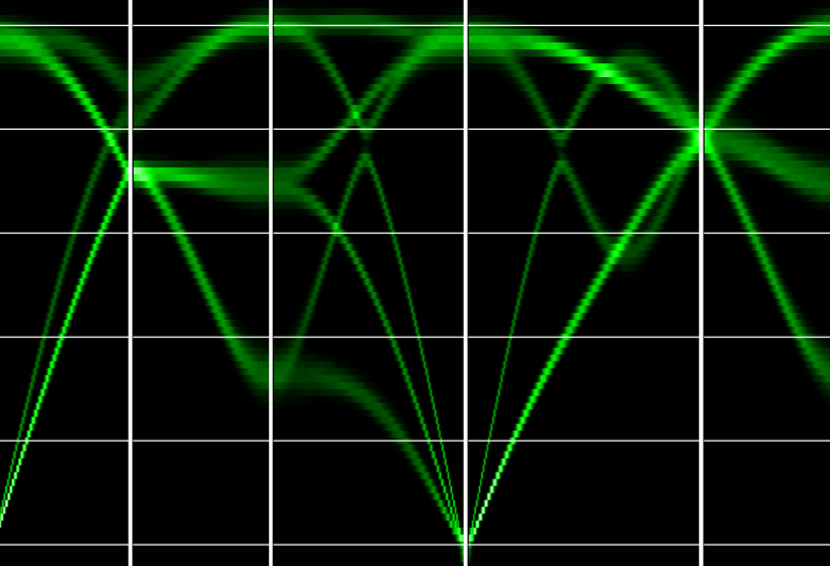
X-ray diffraction measurements of equiatomic B2-ordered FeV were performed in a diamond-anvil cell at room temperature at several pressure points up to 80 GPa that showed the cubic phase to be stable with no indication of structural phase transitions. Density functional theory at 0 K predicts Fermi surface nesting, an electronic topological transition, and a phonon dynamical instability within the experimentally investigated pressure range. Nevertheless, the instability is absent in phonon dispersion curves extracted from ab initio molecular dynamics simulations below the critical volume at temperatures as low as 10 K, indicating that thermal atomic displacements can frustrate the phase transition by renormalizing the phonon dispersion curves. Ferrimagnetism is critical for the stability of the cubic phase at low temperature, but thermal atomic displacements are enough to support the structure at and above the Néel temperature.
Homero Reyes-Pulido, Bimal K C, Ravhi S. Kumar, Russell J. Hemley, and Jorge A. Muñoz. AIP Advances 14, 075108 (2024).
Lattice dynamics and free energies of Fe–V alloys with thermal and chemical disorder
Molecular dynamics simulations of Fe–V binary alloys with body-centered cubic as the underlying lattice were performed using a classical potential for chemically ordered and disordered states at finite temperatures for a common set of volumes. The equation of state was fitted to the computational data to obtain temperature- and chemical-order-dependent state functions via the Moruzzi-Janak-Schwarz approximation. Additionally, vibrational entropies that account for both thermal and chemical disorder were calculated for the equiatomic compositions from phonon density-of-states curves computed using effective force constants obtained from fits to the simulations. The latter predicts that the vibrational entropy at room temperature at equiatomicity is higher for the ordered phase than for the solid solution, a peculiar behavior previously observed experimentally. The internal energy of mixing favors ordering at all compositions, with a maximum at equiatomicity that decreases as the solute concentration decreases. The configurational entropy contribution to the free energy of mixing is almost entirely responsible for the stability of the high-temperature disordered phase.
Cesar Diaz-Caraveo, Bimal K C and Jorge A Muñoz San Martín. J. Phys.: Condens. Matter 36, 445401 (2024).
Performance-Dryout Limits of Oscillating Heat Pipes: A Comprehensive Theoretical and Experimental Determination
The performance limits of oscillating heat pipes (OHPs) have been the subject of research in recent years in order to understand their limitations and allow their broad application in the aerospace field. The present work describes the experimental determination of the performance dryout limits for an additively manufactured OHP geometry filled with R-134a and R-123, as well as the performance limits theoretical predictions using a recently developed analytical approach. Thermal experiments were carried out using a constant-temperature cold-plate approach at three cold plate temperatures, allowing the OHP device to reach steady state for each power step. Results show good agreement for the performance limits predictions with experimental data for both working fluids R-134a and R-123, opening the way for the analytical framework to be used in the design and development of OHPs.
Cesar Diaz-Caraveo, Kieran Wolk, Spencer Miesner, Maxwell Montemayor, Arturo Rodriguez, Vinod Kumar, Jorge A. Muñoz, Takuro Daimaru, Benjamin I. Furst, and Scott N. Roberts. Journal of Thermophysics and Heat Transfer 39, 289 (2025).